

Introduction
Pakistan’s agricultural sector depends heavily on effective crop protection to ensure food security, improve yields, and minimize losses caused by insects, weeds, fungi, and plant diseases. As farming practices continue to modernize, the demand for high-quality pesticides, herbicides, fungicides, insecticides, and biological crop protection products has increased significantly.
However, before any pesticide can be manufactured, imported, marketed, distributed, or sold in Pakistan, it must comply with strict government regulations. These regulations are designed to protect farmers, consumers, livestock, and the environment by ensuring that pesticide products are safe, effective, and meet established quality standards. Whether you are a local manufacturer, an international agrochemical company, an importer, or a distributor planning to introduce new pesticide products into the Pakistani market, understanding the registration process is essential for achieving legal compliance and building customer confidence.
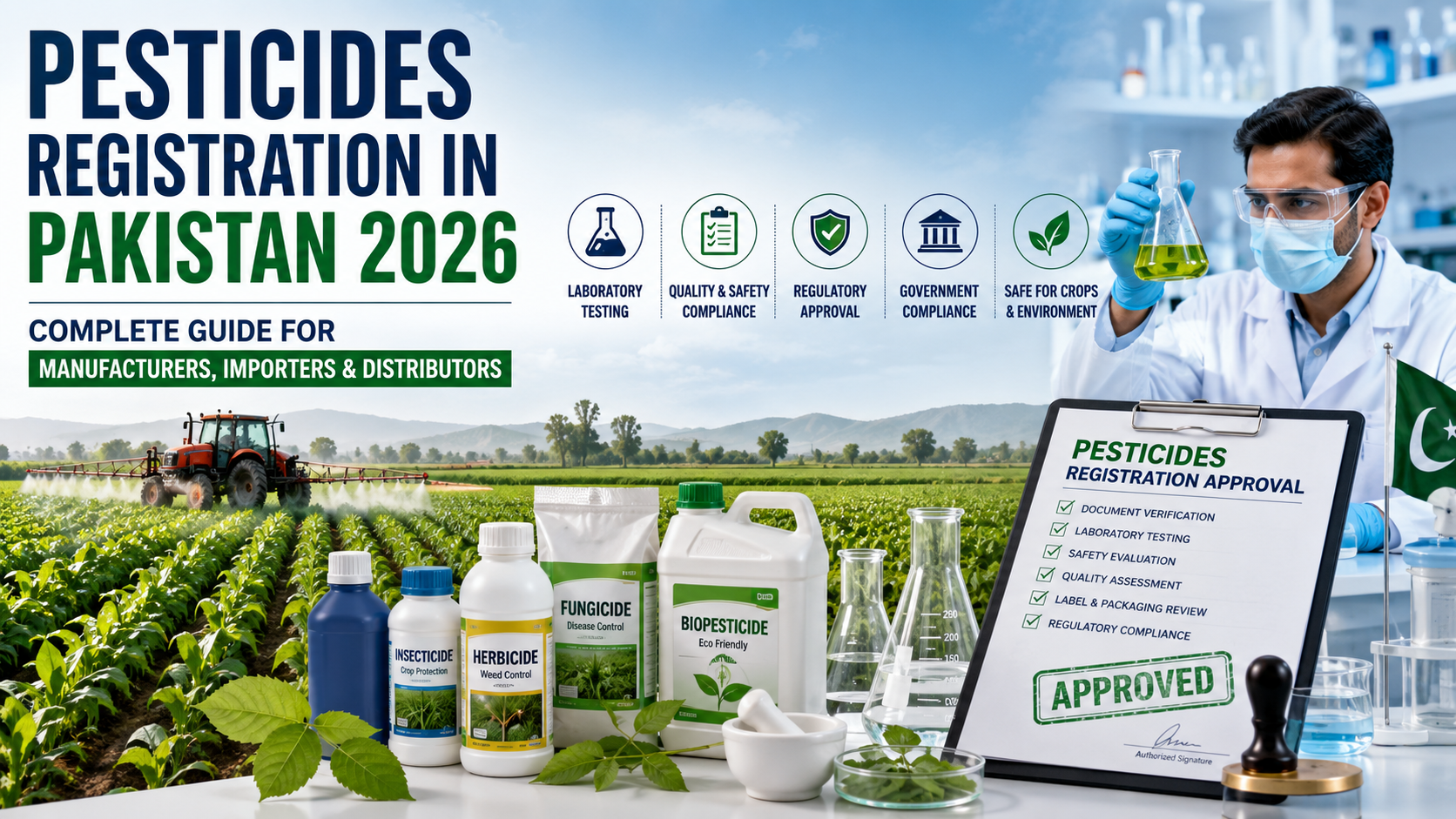
This comprehensive guide explains everything you need to know about Pesticides Registration in Pakistan in 2026, including regulatory authorities, eligibility requirements, required documentation, laboratory testing, approval procedures, common challenges, and how PakCEC (Connect Engineers &Consultants) can help streamline the entire registration process.
What Is Pesticides Registration?
Pesticides registration is the official government approval process that allows a pesticide product to be legally manufactured, imported, distributed, marketed, and sold in Pakistan.
During registration, authorities verify that the pesticide:
- Is safe when used according to instructions
- Effectively controls the targeted pests
- Meets quality and purity standards
- Has scientifically verified ingredients
- Includes proper labeling and safety instructions
- Complies with national agricultural regulations
Without registration, pesticide products cannot legally enter the Pakistani market.
Why Is Pesticides Registration Important?
Pesticides registration benefits manufacturers, distributors, farmers, and consumers by ensuring product quality and legal compliance.
Protects Public Health
Registered pesticides undergo safety evaluations to minimize risks to people, animals, and the environment.
Ensures Product Effectiveness
Registration confirms that products perform as claimed under recommended conditions.
Supports Sustainable Agriculture
Properly registered products help farmers improve crop yields while encouraging responsible pesticide use.
Legal Market Access
Only approved pesticide products can be legally imported, distributed, and sold.
Builds Brand Trust
Registration demonstrates compliance with national standards, increasing confidence among dealers and farmers.
Regulatory Authorities Responsible for Pesticides Registration
Several government departments oversee pesticide regulation in Pakistan, depending on the product type and intended use.
These may include:
- Department of Plant Protection (DPP)
- Ministry of National Food Security & Research (MNFSR)
- Provincial Agriculture Departments
- Accredited Testing Laboratories
- Customs Authorities (for imported products)
The responsible authority may vary based on the pesticide category and applicable regulations.
Types of Pesticides That Require Registration
Commercial crop protection products generally require registration before they can be marketed in Pakistan.
These include:
Insecticides
Products designed to control harmful insects affecting crops.
Herbicides
Chemicals used to eliminate weeds and unwanted vegetation.
Fungicides
Products that prevent or control fungal diseases in crops.
Rodenticides
Products used for controlling rodents in agricultural areas.
Nematicides
Specialized pesticides that target plant-parasitic nematodes.
Biopesticides
Environmentally friendly products derived from natural organisms or biological materials.
Plant Growth Regulators
Products that influence plant growth, flowering, or fruit development.
Who Needs Pesticides Registration?
Registration is generally required for:
- Agrochemical manufacturers
- Pesticide importers
- Crop protection companies
- Agricultural distributors
- Private label companies
- International pesticide manufacturers entering Pakistan
Eligibility Criteria
Applicants are generally expected to have:
- Registered business entity
- Valid NTN
- Sales Tax Registration (if applicable)
- Product formulation details
- Manufacturing information
- Safety documentation
- Laboratory test reports
- Product labels
Documents Required
Typical documentation includes:
- Company registration certificate
- NTN certificate
- Sales Tax Registration
- Product formulation details
- Active ingredient specifications
- Certificate of Analysis (COA)
- Safety Data Sheet (SDS/MSDS)
- Product labels
- Packaging artwork
- Manufacturing process information
- Import documents (for imported products)
- Authorization letter from foreign manufacturer
- Laboratory testing reports
- Product application form
Accurate and complete documentation significantly improves the chances of timely approval.
Step-by-Step Pesticides Registration Process
Step 1: Product Classification
Determine the pesticide category and applicable regulatory requirements.
Step 2: Documentation Preparation
Compile technical, legal, and product-specific documentation.
Step 3: Laboratory Testing
Approved laboratories verify:
- Active ingredient concentration
- Product purity
- Stability
- Safety
- Performance
- Quality standards
Step 4: Application Submission
Submit the completed application along with supporting documents and laboratory reports.
Step 5: Technical Evaluation
Authorities assess:
- Product composition
- Safety profile
- Effectiveness
- Label compliance
- Manufacturing standards
Step 6: Clarifications (If Required)
Authorities may request additional documentation, product samples, or technical information.
Step 7: Registration Approval
After successful evaluation, the pesticide product receives official registration and may be legally marketed in Pakistan.
Laboratory Testing Requirements
Testing commonly includes:
- Active ingredient verification
- Purity analysis
- Stability testing
- Physical and chemical properties
- Toxicity assessment
- Packaging compatibility
- Product performance evaluation
Labeling Requirements
Approved pesticide labels generally include:
- Product name
- Brand name
- Active ingredients
- Usage instructions
- Target pests
- Safety precautions
- Hazard warnings
- First-aid information
- Net weight or volume
- Batch number
- Manufacturing date
- Manufacturer and importer details
Accurate labeling is essential for regulatory compliance.
Common Challenges During Registration
Businesses often encounter delays due to:
- Incomplete documentation
- Incorrect product labels
- Missing laboratory reports
- Formulation discrepancies
- Delayed testing
- Regulatory queries
- Packaging compliance issues
Working with experienced consultants helps avoid these common obstacles.
Benefits of Registering Pesticides
Registered products offer several advantages:
- Legal market entry
- Greater customer confidence
- Improved brand reputation
- Access to nationwide distribution
- Compliance with government regulations
- Reduced legal risk
- Better export opportunities
Why Choose PakCEC?
PakCEC (Connect Engineers & Consultants) provides comprehensive consultancy services for pesticide registration and regulatory compliance across Pakistan.
Our services include:
- Eligibility assessment
- Documentation preparation
- Laboratory coordination
- Application submission
- Regulatory follow-up
- Label compliance review
- Technical consultancy
- End-to-end approval support
Our experienced professionals help businesses navigate complex regulatory requirements while reducing delays and ensuring compliance.
Frequently Asked Questions
Is pesticides registration mandatory in Pakistan?
Yes. Commercial pesticide products generally require official registration before they can be manufactured, imported, distributed, or sold.
Can imported pesticides be registered?
Yes. Imported pesticide products may be registered if they meet Pakistan’s regulatory requirements and are supported by the necessary documentation.
Are laboratory tests mandatory?
Yes. Laboratory testing is typically required to verify product quality, composition, and compliance.
How long does the registration process take?
The timeline varies depending on product type, documentation completeness, laboratory testing, and regulatory review.
Can PakCEC manage the complete registration process?
Yes. PakCEC provides complete assistance, including documentation, laboratory coordination, application submission, and regulatory follow-up.
Conclusion
Pesticides registration is a crucial step for businesses seeking to introduce crop protection products into Pakistan’s agricultural market. By complying with national regulations, manufacturers and importers can ensure legal market access, strengthen customer confidence, and support sustainable farming practices.
Preparing accurate documentation, completing required laboratory testing, and following the proper approval process can significantly improve the likelihood of successful registration.
If you are planning to manufacture, import, or distribute pesticide products in Pakistan, working with experienced consultants can help you avoid costly delays and ensure full regulatory compliance.
Contact PakCEC Today
Ready to register your pesticide products in Pakistan?
PakCEC (Connect Engineers & Consultants) provides expert consultancy for pesticide registration, laboratory coordination, regulatory approvals, and compliance support. Contact our specialists today to streamline your registration process and bring your crop protection products to market with confidence.
