

Introduction
Pakistan’s agricultural sector plays a vital role in the country’s economy, contributing significantly to food security, employment, and exports. One of the most important factors affecting agricultural productivity is the quality of seeds used by farmers. High-quality, certified seeds produce healthier crops, higher yields, and greater resistance to pests and diseases.
To protect farmers and maintain agricultural standards, Pakistan has established regulations governing the registration, certification, import, production, and sale of seeds. Whether you manufacture seeds locally, import hybrid varieties, or distribute agricultural seed products, complying with these regulations is essential before entering the market.
Seed registration ensures that only tested, high-quality seed varieties reach farmers. It also helps prevent counterfeit products, protects plant genetics, and supports sustainable agricultural development across Pakistan.
This comprehensive guide explains everything you need to know about Seed Registration in Pakistan in 2026, including legal requirements, documentation, testing procedures, certification, regulatory authorities, common challenges, and how PakCEC (Connect Engineers & Consultants) can simplify the entire process.
What Is Seed Registration?
Seed registration is the official approval process through which a seed variety is evaluated, tested, and authorized for commercial production, import, distribution, and sale in Pakistan.
The registration process verifies that the seed:
- Meets national quality standards
- Performs consistently under local conditions
- Produces acceptable crop yields
- Maintains genetic purity
- Has acceptable germination rates
- Is free from prohibited diseases and contaminants
Only registered and approved seed varieties can be legally marketed in Pakistan.
Why Is Seed Registration Important?
Registering seed products provides several important benefits for both businesses and farmers.
Protects Farmers
Certified seeds provide reliable germination, improved crop performance, and consistent quality.
Ensures Product Quality
Registration confirms that seeds meet established standards for purity, health, and performance.
Legal Compliance
Businesses avoid regulatory penalties, product seizures, and legal issues by registering their products.
Supports Food Security
High-quality seeds contribute to increased agricultural productivity and national food security.
Builds Market Confidence
Registered products are trusted by distributors, dealers, and farmers throughout Pakistan.
Regulatory Authorities Responsible for Seed Registration
Seed regulation in Pakistan involves several government organizations responsible for evaluating, testing, and approving seed varieties.
These may include:
- Ministry of National Food Security & Research (MNFSR)
- Federal Seed Certification & Registration Department (FSC&RD)
- Provincial Agriculture Departments
- National Agricultural Research Centers
- Accredited Seed Testing Laboratories
The applicable authority depends on the type of seed and intended use.
Types of Seeds That Require Registration
Most commercial seed varieties require registration before marketing.
These include:
Field Crop Seeds
- Wheat
- Rice
- Cotton
- Maize
- Sugarcane
- Barley
- Millet
Vegetable Seeds
- Tomato
- Onion
- Potato
- Chili
- Cucumber
- Okra
- Cabbage
Fruit Seeds
- Citrus
- Mango
- Guava
- Papaya
- Grapes
Oilseed Crops
- Canola
- Sunflower
- Mustard
- Sesame
Fodder Crops
- Alfalfa
- Sorghum
- Clover
Hybrid Seeds
Hybrid varieties developed through breeding programs.
Imported Seeds
International seed companies must also obtain approval before commercial distribution.
Who Needs Seed Registration?
Registration is generally required for:
- Seed manufacturers
- Seed importers
- Agricultural companies
- Plant breeders
- Seed distributors
- Exporters
- Private label seed businesses
Eligibility Criteria
Applicants should generally possess:
- Registered business entity
- NTN Registration
- Sales Tax Registration (if applicable)
- Product information
- Variety development records
- Laboratory testing reports
- Quality management procedures
Documents Required
Commonly required documents include:
- Company registration certificate
- NTN certificate
- Sales Tax Registration
- Seed variety information
- Plant breeding details
- Variety characteristics
- Laboratory test reports
- Germination reports
- Purity reports
- Disease-free certification
- Seed sample details
- Product labels
- Packaging information
- Authorization letter (for imported products)
Complete documentation helps avoid unnecessary delays during evaluation.
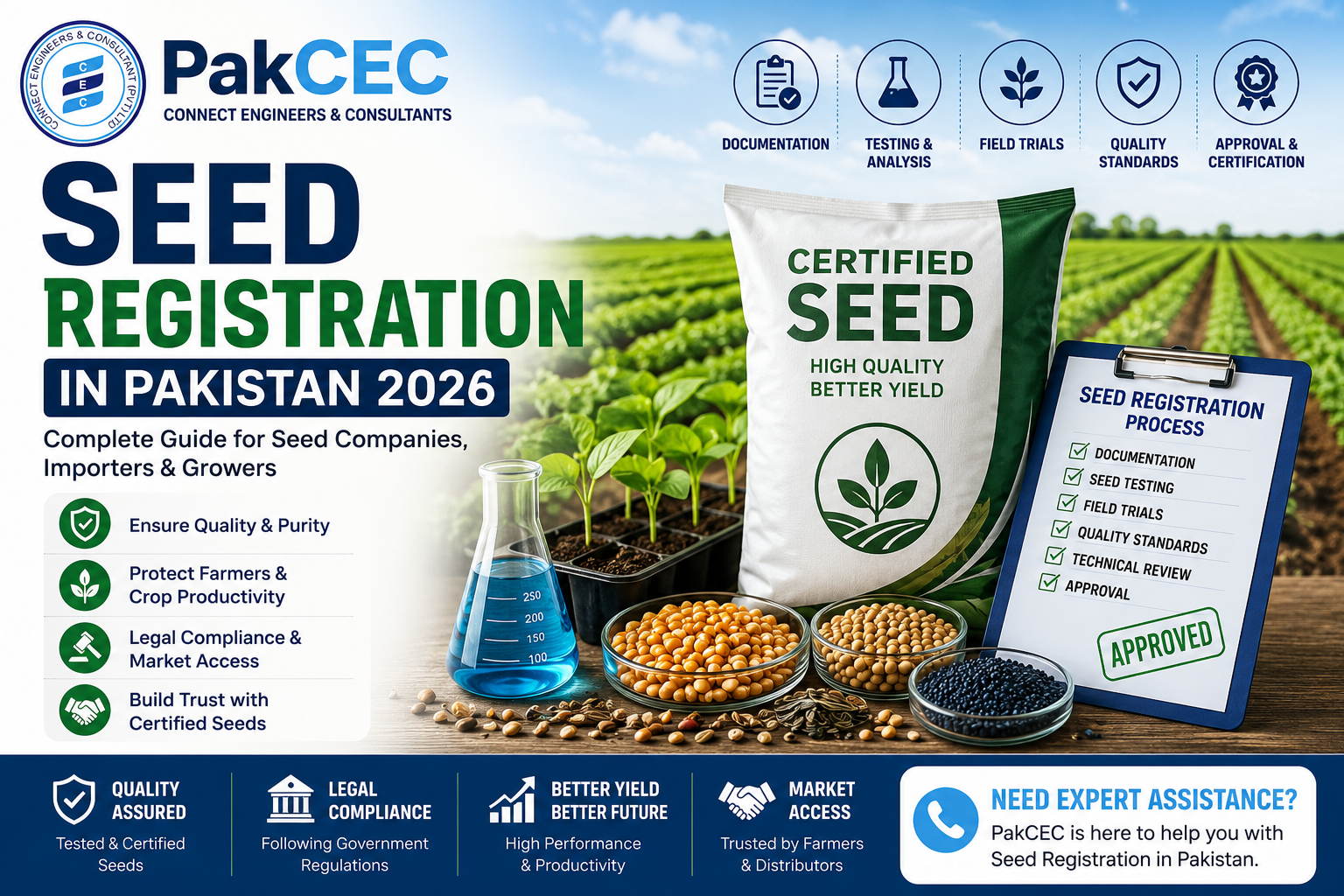
Step-by-Step Seed Registration Process
Step 1: Variety Identification
Determine whether the seed variety requires registration under applicable regulations.
Step 2: Documentation Preparation
Compile technical documents, breeding information, laboratory reports, and business registrations.
Step 3: Seed Testing
Approved laboratories evaluate:
- Germination percentage
- Physical purity
- Moisture content
- Genetic purity
- Seed health
- Disease resistance
- Performance consistency
Step 4: Field Trials
For certain varieties, official field performance trials may be required to evaluate:
- Yield
- Adaptability
- Stability
- Resistance to pests and diseases
Step 5: Application Submission
Submit the registration application with supporting documentation and laboratory reports.
Step 6: Technical Review
Authorities review:
- Variety performance
- Laboratory results
- Compliance documents
- Seed characteristics
- Production information
Step 7: Registration Approval
Once approved, the seed variety may be commercially produced, imported, distributed, and sold in Pakistan.
Seed Quality Standards
Registered seeds must generally satisfy standards related to:
- Germination percentage
- Physical purity
- Genetic identity
- Moisture levels
- Freedom from weed seeds
- Disease-free status
- Proper packaging
- Accurate labeling
Labeling Requirements
Seed labels typically include:
- Variety name
- Lot number
- Germination percentage
- Purity percentage
- Net weight
- Date of testing
- Expiry or validity
- Manufacturer information
- Importer information (if applicable)
- Storage instructions
Common Challenges During Registration
Many applicants experience delays due to:
- Incomplete documentation
- Missing laboratory reports
- Poor-quality seed samples
- Incorrect labeling
- Variety identification issues
- Delayed field trials
Professional consultancy significantly reduces these challenges.
Benefits of Registering Seeds
Businesses gain several advantages, including:
- Legal compliance
- Nationwide distribution
- Greater customer confidence
- Increased market opportunities
- Improved brand reputation
- Higher sales potential
- Better export readiness
Why Choose PakCEC?
PakCEC (Connect Engineers & Consultants) provides professional consultancy services for seed registration and agricultural regulatory compliance in Pakistan.
Our services include:
- Eligibility assessment
- Complete documentation support
- Application preparation
- Laboratory coordination
- Regulatory submissions
- Compliance review
- Label verification
- Follow-up with authorities
- End-to-end registration assistance
Our experienced consultants help businesses complete the registration process efficiently while minimizing delays.
Frequently Asked Questions
Is seed registration mandatory in Pakistan?
Yes. Commercial seed varieties generally require registration before marketing.
Can imported seeds be registered?
Yes. Imported seed products can be registered if they comply with Pakistan’s regulatory requirements.
Is laboratory testing required?
Yes. Germination, purity, moisture, and seed health testing are typically required.
How long does the registration process take?
The timeline varies depending on the seed variety, testing requirements, and regulatory review.
Can PakCEC manage the entire registration process?
Yes. PakCEC offers complete support from documentation and testing coordination to regulatory approval.
Conclusion
Seed registration is a critical requirement for ensuring quality, protecting farmers, and supporting sustainable agriculture in Pakistan. By complying with national regulations, businesses can legally market their products, strengthen customer trust, and contribute to improved crop productivity. Whether you are introducing a new hybrid variety, importing certified seeds, or expanding your agricultural business, completing the registration process correctly is essential for long-term success.
Contact PakCEC Today
Planning to register your seed products in Pakistan?
PakCEC (Connect Engineers & Consultants) provides expert assistance for seed registration, regulatory approvals, laboratory coordination, and compliance. Contact our team today to streamline your registration process and confidently bring your seed products to market.
