

Pakistan is rapidly moving toward renewable energy adoption as businesses, industries, and homeowners seek cost-effective alternatives to conventional electricity. Rising energy prices, frequent power shortages, and increasing awareness of sustainable energy solutions have created unprecedented opportunities for solar energy companies and renewable energy service providers.
As the renewable energy sector continues to expand, businesses operating in the industry must establish credibility, comply with regulatory requirements, and demonstrate technical competence. One of the most important steps in achieving these goals is obtaining AEDB Registration.
For solar companies, EPC contractors, renewable energy consultants, and energy solution providers, AEDB registration serves as a powerful credential that can improve market trust, strengthen business reputation, and open doors to larger commercial opportunities.
In this comprehensive guide, we will explain everything you need to know about AEDB Registration in Pakistan, including eligibility criteria, required documentation, registration procedures, compliance requirements, industry benefits, common challenges, and how PakCEC can help simplify the process.
Understanding AEDB
AEDB stands for the Alternative Energy Development Board.
The organization was established to promote and facilitate the development of renewable energy projects across Pakistan. Its primary objective is to reduce dependence on conventional energy sources while encouraging investments in clean and sustainable technologies.
AEDB has played a significant role in supporting the growth of:
- Solar Energy Projects
- Wind Power Projects
- Biomass Energy Projects
- Waste-to-Energy Solutions
- Small Hydropower Projects
- Renewable Energy Infrastructure Development
Over the years, AEDB has become one of the most recognized authorities associated with renewable energy development in Pakistan.
As renewable energy adoption continues to increase, businesses often seek AEDB registration to demonstrate professionalism, technical competence, and industry credibility.
Why AEDB Registration Is Important in 2026
The renewable energy industry has become highly competitive. Thousands of businesses now offer solar installation, engineering, procurement, construction (EPC), consulting, and energy management services. Customers increasingly want assurance that they are working with qualified and reliable companies.
AEDB registration helps businesses establish this confidence.
Enhanced Business Credibility
One of the biggest advantages of AEDB registration is improved credibility.When clients compare multiple solar providers, they often choose companies that possess recognized certifications and registrations.
AEDB registration demonstrates that a company operates professionally within Pakistan’s renewable energy sector.
This helps build trust among:
- Residential customers
- Commercial organizations
- Industrial clients
- Government agencies
- Investors
- Financial institutions
Competitive Advantage
The renewable energy market continues to grow rapidly. With increased competition, businesses need ways to differentiate themselves.
AEDB registration can provide a significant competitive advantage by showcasing commitment to industry standards and regulatory compliance. Many customers specifically look for registered companies before making investment decisions regarding solar installations.
Access to Larger Projects
Many corporate and government projects require service providers to demonstrate technical capabilities and compliance credentials.
AEDB registration can strengthen eligibility when bidding for:
- Government contracts
- Public sector projects
- Industrial solar installations
- Commercial energy projects
- Large-scale renewable energy initiatives
This can significantly increase business opportunities.
Improved Customer Confidence
Installing a solar energy system often represents a major financial investment. Customers naturally want assurance that they are working with a qualified provider.
AEDB registration helps reassure clients that the company possesses the expertise and professionalism needed to deliver successful projects.
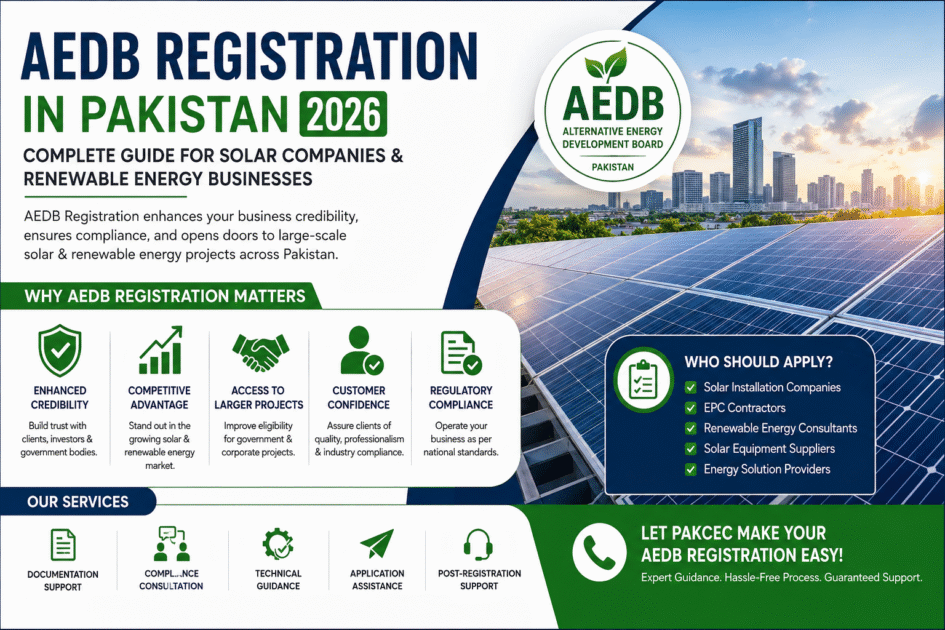
Who Should Apply for AEDB Registration?
AEDB registration can benefit various types of renewable energy businesses.
Solar Installation Companies
Businesses involved in solar system design, installation, commissioning, and maintenance can benefit significantly from registration.
EPC Contractors
Engineering, Procurement, and Construction firms working on renewable energy projects often pursue registration to strengthen their credentials.
Renewable Energy Consultants
Consultants advising businesses and investors on renewable energy projects can improve professional credibility through registration.
Solar Equipment Suppliers
Companies supplying solar panels, inverters, batteries, mounting systems, and related products may use AEDB registration to enhance market trust.
Energy Service Providers
Organizations offering comprehensive energy solutions can leverage registration as part of their business development strategy.
Growth of Pakistan’s Renewable Energy Market
Pakistan’s renewable energy industry is experiencing exceptional growth.
Several factors are driving this expansion:
Rising Electricity Costs
Increasing utility tariffs encourage consumers and businesses to seek alternative energy solutions. Solar energy provides long-term savings and greater energy independence.
Energy Security Concerns
Many businesses are looking for reliable energy sources to reduce operational disruptions. Solar systems provide increased stability and reduced reliance on the national grid.
Technological Advancements
Modern solar technologies offer:
- Higher efficiency
- Improved durability
- Lower maintenance requirements
- Better return on investment
Environmental Awareness
Organizations increasingly prioritize sustainability and environmental responsibility. Renewable energy solutions support corporate sustainability goals while reducing carbon emissions.
AEDB Registration Requirements
The registration process typically requires businesses to demonstrate operational capability, technical expertise, and organizational readiness.
Common requirements may include:
Company Registration Documents
Applicants may need to submit:
- Certificate of Incorporation
- SECP Registration Documents
- Partnership Deed (if applicable)
- Business Registration Certificate
- NTN Certificate
- Sales Tax Registration Certificate
Company Profile
A detailed company profile often includes:
- Business overview
- Organizational structure
- Services offered
- Technical capabilities
- Market experience
Technical Team Information
Companies may be required to provide information regarding:
- Engineers
- Technical experts
- Project managers
- Installation teams
Qualified personnel strengthen registration applications.
Project Experience Documentation
Previous projects demonstrate operational competence.
Examples include:
- Residential solar installations
- Commercial solar projects
- Industrial energy systems
- Renewable energy consulting assignments
Office and Infrastructure Information
Businesses may need to provide details regarding:
- Office location
- Operational facilities
- Equipment resources
- Technical infrastructure
Step-by-Step AEDB Registration Process
Step 1: Initial Consultation
Begin by assessing your business readiness and identifying documentation requirements.
Professional consultants can help evaluate eligibility.
Step 2: Document Collection
Gather all required documents and verify their accuracy.
Incomplete documentation remains one of the leading causes of registration delays.
Step 3: Application Preparation
Prepare registration forms and supporting materials carefully.
Accuracy is critical.
Step 4: Submission
Submit the application along with all required supporting documents.
Step 5: Technical Evaluation
Applications may undergo technical review and verification procedures.
Authorities assess organizational capabilities and supporting documentation.
Step 6: Clarifications and Corrections
Applicants may be asked to provide additional information if required.
Prompt responses help accelerate processing.
Step 7: Registration Approval
Upon successful completion of the review process, registration approval may be granted.
Common Challenges Businesses Face
Many companies encounter obstacles during registration.
Incomplete Applications
Missing documents frequently cause delays.
Lack of Technical Documentation
Insufficient evidence of technical capability can impact approval timelines.
Regulatory Complexity
Renewable energy regulations continue evolving. Keeping up with current requirements can be challenging.
Limited Internal Expertise
Many businesses lack dedicated compliance teams and therefore struggle with regulatory procedures. Professional assistance often helps avoid costly mistakes.
Benefits of Working with PakCEC
Navigating compliance requirements independently can be time-consuming and stressful. PakCEC provides end-to-end assistance throughout the registration process.
Our services include:
Documentation Preparation
We help businesses organize and prepare required records.
Compliance Consultation
Our experts ensure applications align with current regulatory requirements.
Technical Guidance
We assist in presenting technical capabilities effectively.
Application Support
Our team manages registration procedures efficiently to reduce delays.
Ongoing Compliance Assistance
We help businesses maintain compliance after registration approval.
Future Opportunities for Registered Renewable Energy Businesses
The future of renewable energy in Pakistan looks extremely promising. Government initiatives, rising energy demand, and technological improvements continue creating opportunities across the sector.
Registered businesses are better positioned to benefit from:
- Utility-scale solar projects
- Commercial installations
- Industrial energy solutions
- Net metering expansion
- Renewable energy investments
- Corporate sustainability programs
Companies that establish compliance foundations today can secure long-term competitive advantages.
Why Early Registration Matters
Many businesses wait until large opportunities arise before pursuing registration. This can result in missed contracts and delayed growth.
Obtaining registration early provides:
- Immediate credibility
- Better project readiness
- Increased client trust
- Improved tender eligibility
- Stronger market positioning
Proactive compliance often leads to faster business growth.
Conclusion
AEDB Registration is an important step for businesses operating within Pakistan’s rapidly expanding renewable energy industry.
Whether you are a solar installer, EPC contractor, renewable energy consultant, equipment supplier, or energy service provider, registration helps improve credibility, support compliance efforts, strengthen customer trust, and create access to larger commercial opportunities. As renewable energy adoption accelerates throughout Pakistan, companies that invest in proper registration and compliance today will be better positioned to capitalize on future growth opportunities.
PakCEC simplifies the entire AEDB registration process by providing expert guidance, documentation support, compliance consulting, and professional assistance from start to finish.

[…] If you are registered with PSEB as an IT or IT-enabled services company, ISO 27001 also strengthens your profile with foreign buyers. See our PSEB registration guide. […]