

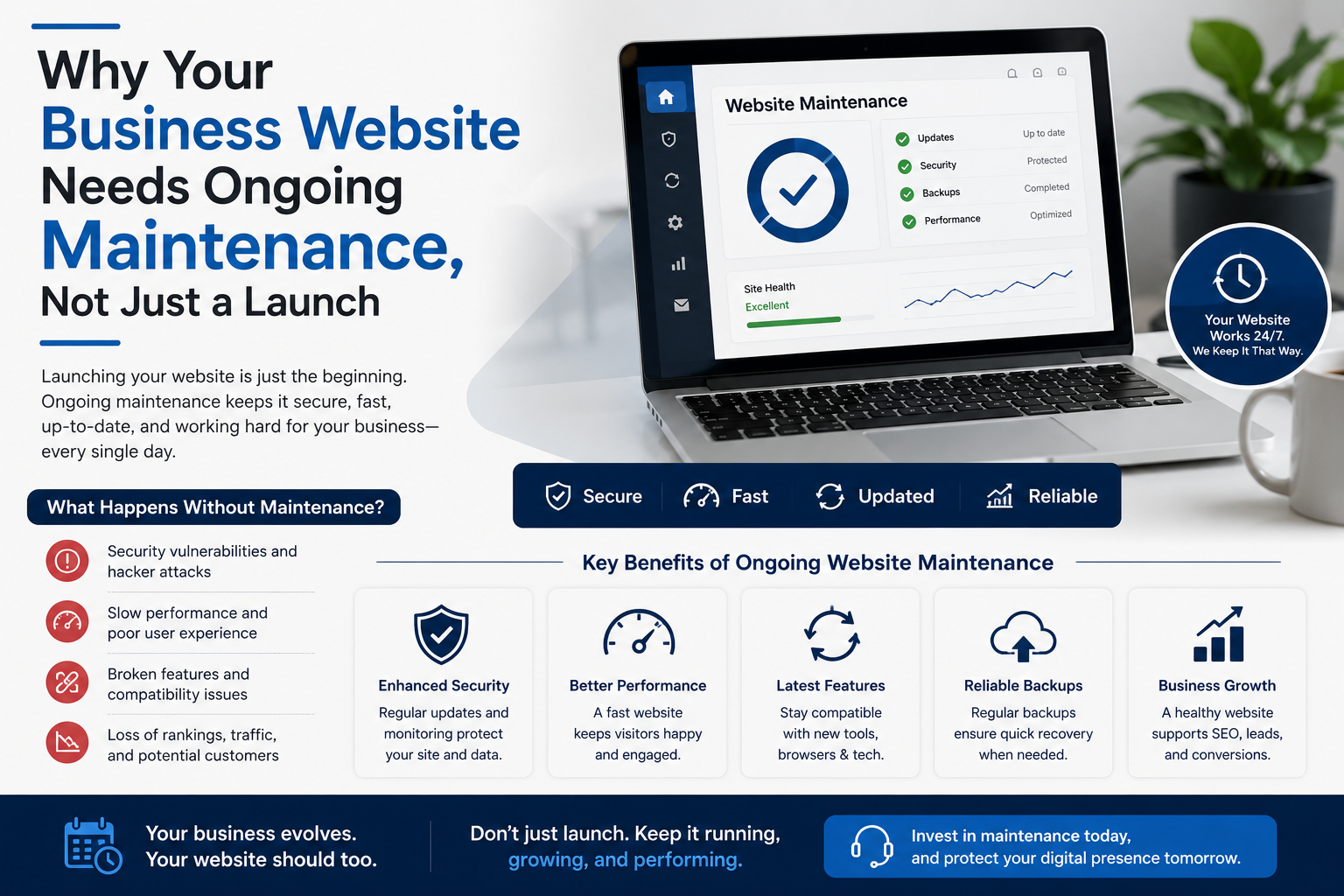
Launching a website often feels like the finish line, but for most businesses it’s actually the starting point. A site that isn’t maintained after launch tends to slow down, fall behind on security updates, and gradually lose ground in search rankings, even if it looked great on day one. This guide covers why ongoing maintenance matters, what it should actually include, and the warning signs that your site has been neglected for too long.
What Happens to a Website Without Maintenance
Websites aren’t static objects. The platforms they’re built on, the plugins they rely on, and the security threats they face all continue to evolve after launch. A site left untouched for a year or more often accumulates a mix of problems that weren’t there at launch: outdated plugins, broken integrations, slower load times, and in some cases, security vulnerabilities that weren’t a concern when the site first went live.
Search engines also factor in site performance and security when ranking pages, meaning a neglected site doesn’t just look outdated, it can actively lose visibility in search results over time. Businesses that treat their website as a one time project rather than an ongoing asset often find themselves paying more for a rebuild later than they would have spent on consistent maintenance along the way.
What Ongoing Maintenance Should Actually Include
Website maintenance covers more than just occasionally checking that the site is still online. A proper maintenance routine typically includes several recurring tasks.
- Plugin and platform updates: Keeping the underlying software current to avoid security gaps and compatibility issues
- Security monitoring: Watching for suspicious activity and applying patches before vulnerabilities are exploited
- Performance checks: Monitoring load speed and fixing anything that’s slowing the site down over time
- Content updates: Keeping pricing, service details, and other business information accurate and current
- Backup management: Maintaining recent backups so the site can be restored quickly if something goes wrong
Businesses building a new site should factor this into their planning from the start, rather than treating it as a separate concern to figure out later. Reviewing the full scope of available website development services upfront, including what happens after launch, helps avoid gaps in coverage down the line.
Warning Signs Your Site Has Been Neglected
A few common symptoms tend to show up when a website hasn’t received regular attention.
- Pages that load noticeably slower than they used to, especially on mobile
- Broken forms or contact buttons that stopped working after a plugin update elsewhere on the site
- A steady decline in search rankings for pages that used to perform well
- Outdated content, such as old pricing, discontinued services, or expired promotions still displayed on the site
- Security warnings from browsers or hosting providers flagging outdated software
If more than one of these sounds familiar, it’s usually a sign that maintenance has been skipped for longer than it should have been, and addressing it sooner tends to be far less costly than waiting until the site breaks entirely.
E-Commerce Sites Need Even Closer Attention
For businesses running an online store, the stakes around maintenance are even higher. Payment gateway integrations, inventory syncing, and checkout functionality all depend on the underlying platform staying current, and even small compatibility issues can directly interrupt sales. Businesses relying on e-commerce development as a core part of their revenue should treat maintenance as a non negotiable ongoing cost rather than an optional extra.
Building Maintenance Into Your Website Plan
Rather than waiting for something to break, the more sustainable approach is agreeing on a maintenance plan at the same time a website is built or redesigned. This might include a set number of hours each month for updates and monitoring, a defined response time for urgent issues, and a regular schedule for reviewing site performance and security.
Businesses managing a broader digital footprint, including mobile apps or custom internal tools, often benefit from working with a single provider across services like mobile application development and custom software development, since coordinated maintenance across connected systems tends to be more reliable than managing each piece separately.
If your website hasn’t had a proper review in a while, it’s worth getting an assessment before problems compound further. You can explore the full range of IT and software solutions available, or reach out through the contact page to discuss a maintenance plan suited to your site.

[…] If you are registered with PSEB as an IT or IT-enabled services company, ISO 27001 also strengthens your profile with foreign buyers. See our PSEB registration guide. […]