

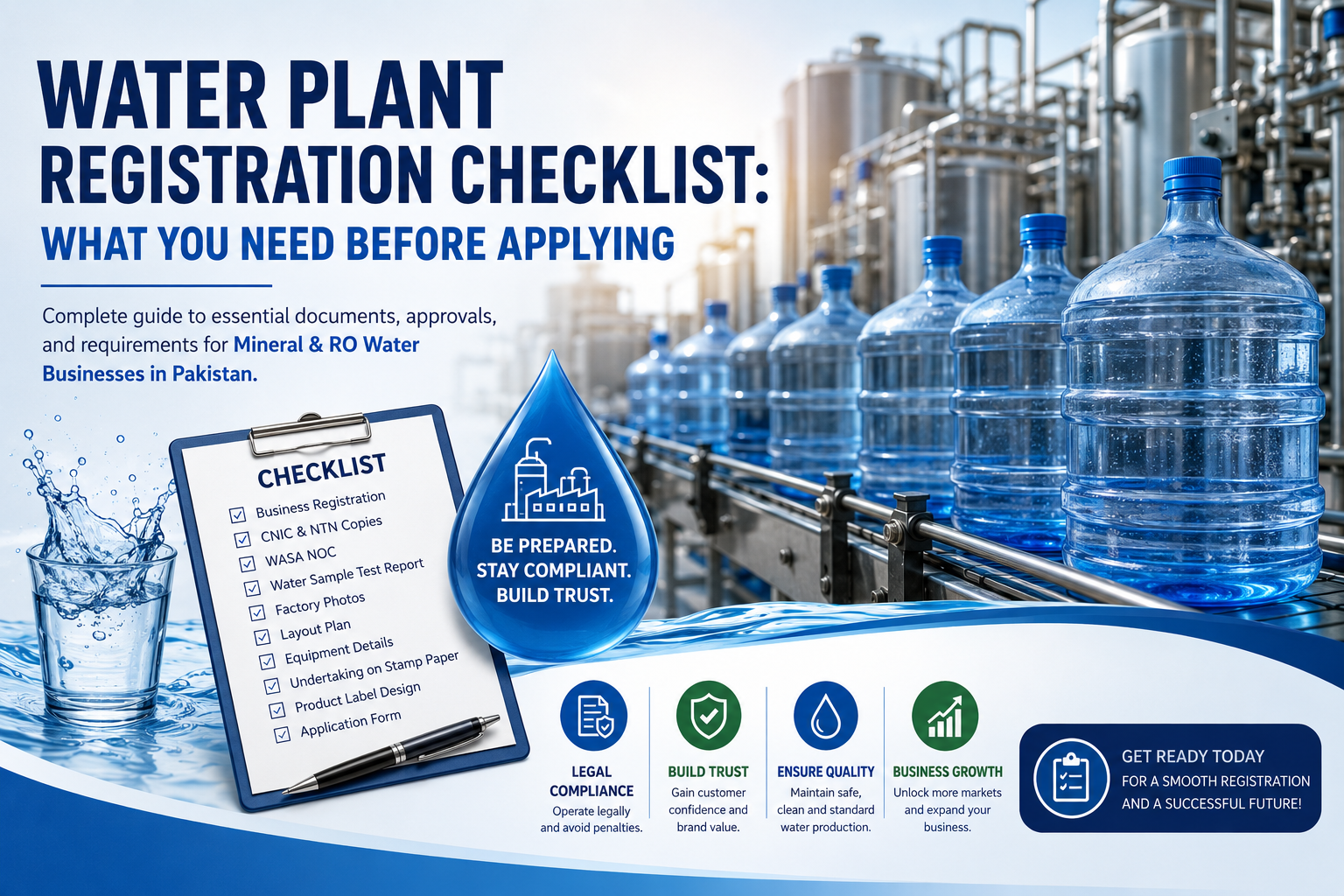
Applying for water plant registration without a clear checklist is one of the fastest ways to end up stuck in back and forth with regulators, especially once site inspections and product testing enter the picture. Instead of walking through the process step by step, this guide flips the format and gives you a practical checklist, common mistakes to avoid, and answers to the questions mineral and RO water businesses ask most before they apply.
Before You Apply: The Readiness Checklist
Run through this list before submitting anything. Most delays trace back to one of these items being incomplete or missing entirely.
- ☐ Business is formally registered with SECP or the relevant authority
- ☐ National Tax Number and GST registration are active and up to date
- ☐ Water source has been tested and documented before submission
- ☐ Facility layout and filtration equipment specifications are finalized
- ☐ Product samples are ready for laboratory testing against PSQCA standards
- ☐ On site testing equipment, such as a TDS meter or PH meter, is calibrated and functional
- ☐ Budget accounts for application, testing, inspection, and renewal fees
Businesses that haven’t finished formal company registration should handle that first through SECP corporate registration services, since water plant registration applications are typically rejected without it.
5 Common Mistakes That Delay Water Plant Registration
- Installing equipment before confirming facility requirements. Businesses that build out their plant before checking regulatory layout and hygiene standards sometimes need costly modifications after the fact.
- Submitting product samples before source testing is complete. Product testing without documented source water quality often leads to rejected applications that need to be resubmitted from scratch.
- Incomplete business documentation. Missing tax registration or outdated company records remain one of the most common causes of application delays across every regulated industry, water included.
- Underestimating ongoing testing costs. Businesses that budget only for the initial application often get caught off guard by the cost of recurring quality testing required to maintain registration.
- Skipping equipment calibration. Outdated or miscalibrated testing tools can produce inaccurate readings, leading to failed inspections that could have been avoided with routine equipment checks.
Small RO Plant vs Large Scale Bottling Operation
| Requirement | Small Local RO Plant | Large Scale Bottling Operation |
|---|---|---|
| Site inspection | Required, smaller scope | Required, more extensive |
| Product testing | Required | Required, broader parameter set |
| Registration fee | Lower | Higher, based on capacity |
| Renewal frequency | Periodic | Periodic, often with stricter monitoring |
Businesses still in the setup phase, regardless of scale, often benefit from pairing registration planning with proper water plant installation support, since facility design has a direct impact on passing inspection the first time around.
Frequently Asked Questions
Can I sell packaged water while my registration is still pending?
No, packaged drinking water generally cannot be legally sold or distributed until registration is fully approved and issued.
What happens if my water sample fails quality testing?
Most businesses are given the opportunity to identify the issue, whether it’s a filtration or source problem, and resubmit samples for another round of testing.
Do I need separate registration for different bottle sizes or product lines?
In many cases, yes, particularly if different product lines involve different formulations or packaging types, since each may require its own testing and approval.
How often does water plant registration need to be renewed?
Registration is generally valid for a set period, after which renewal is required, typically involving updated documentation and fresh quality testing.
Is the process different for a small local RO plant compared to a larger bottling business?
Yes, larger operations typically face more extensive inspection requirements and a broader set of quality testing parameters compared to smaller, local scale plants.
When It Makes Sense to Use a Consultancy
Handling water plant registration alone is possible, but most businesses find the process faster and less stressful with outside support, especially for their first application. A consultancy experienced with PSQCA product certification can flag missing documents early and manage communication with regulators on your behalf.
This becomes even more valuable for businesses juggling multiple approvals at once, since many water plant operators also need specialized industry licensing or tax compliance support through FBR tax registration services before operations can begin.
Ready to Start Your Application?
Once your checklist is complete, the next step is getting expert eyes on your documentation and facility before submission. Reach out through the contact page to schedule a consultation, or explore the full range of business consultancy services available for companies navigating Pakistan’s regulatory requirements.

[…] If you are registered with PSEB as an IT or IT-enabled services company, ISO 27001 also strengthens your profile with foreign buyers. See our PSEB registration guide. […]