

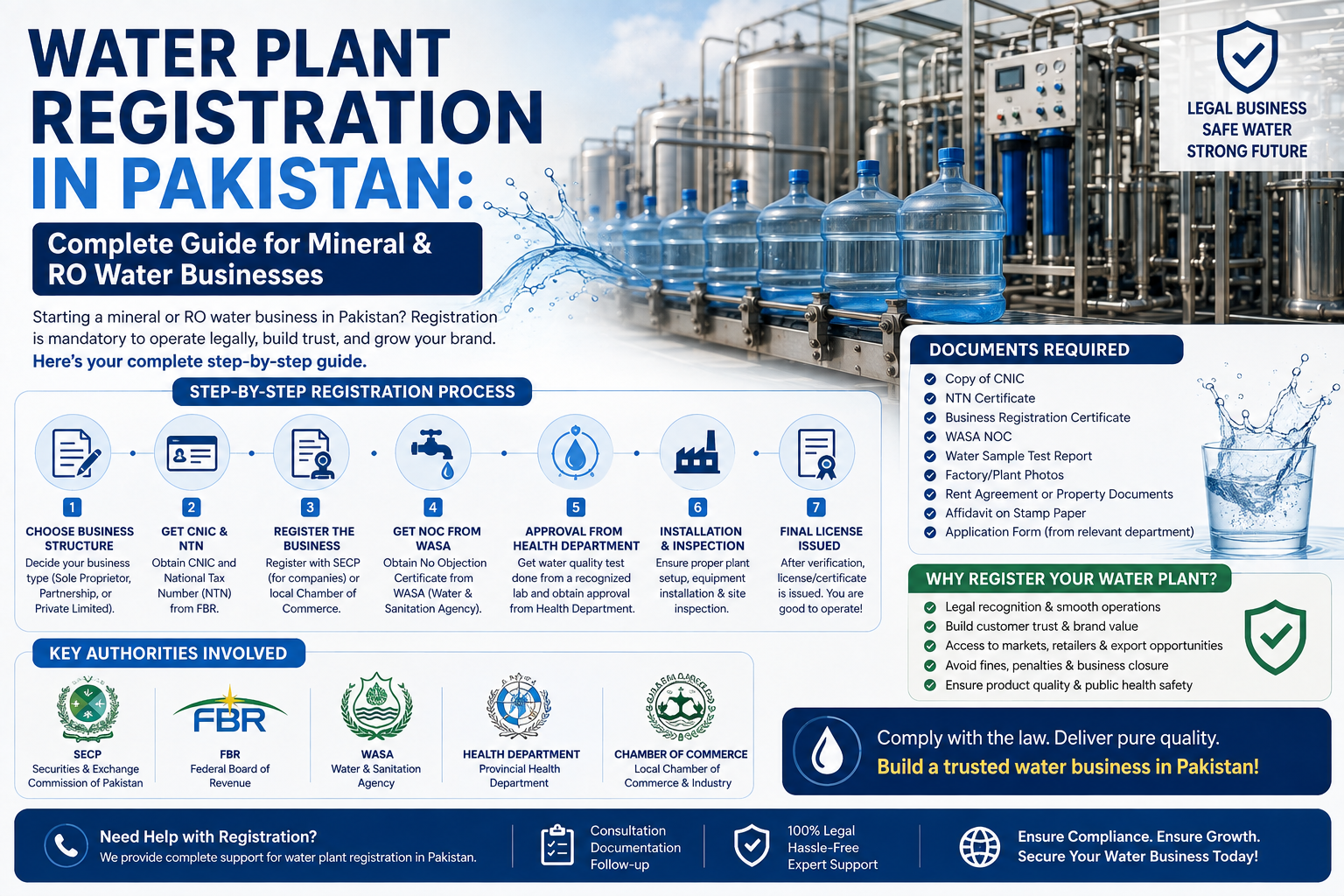
Starting a mineral water or RO water business in Pakistan requires more than just installing filtration equipment and bottling lines. Before any packaged drinking water can legally reach store shelves, the business needs to complete water plant registration with the relevant authorities. This guide covers what water plant registration involves, who needs it, the documents required, and the full step by step process for 2026.
What Is Water Plant Registration?
Water plant registration is the formal process of getting a mineral water or RO water production facility approved by Pakistan’s regulatory authorities before the business can legally manufacture and sell packaged drinking water. The process confirms that the plant’s water source, filtration process, and finished product all meet approved safety and quality standards.
Without valid registration, a water plant cannot legally distribute its product, regardless of how advanced its filtration or bottling equipment might be. For entrepreneurs entering this space, understanding water plant registration Pakistan requirements early helps avoid costly setbacks after equipment has already been purchased and installed.
Legal Requirements for Water Business in Pakistan
Packaged drinking water is treated as a regulated consumable product in Pakistan, which means it falls under both provincial food safety oversight and national quality standards enforcement. Businesses that skip registration risk having their product seized, facing fines, or being shut down entirely once discovered.
Because water plants involve both a physical facility and a packaged consumer product, registration typically touches multiple regulatory areas at once, from facility standards to final product testing. Businesses setting up a new plant often coordinate registration alongside their facility build, working with providers experienced in water plant installation to make sure the physical setup meets the technical standards regulators expect during inspection.
Who Needs This Registration?
Water plant registration requirements apply to any business producing or distributing packaged drinking water, not just large scale bottlers. This includes:
- Mineral water manufacturers producing bottled water for retail sale
- RO plant operators purifying and bottling water for local or regional distribution
- Businesses supplying bulk water to hotels, restaurants, or offices under a branded label
- Companies rebranding or repackaging water sourced from another registered facility
Even small scale local RO plants intended for community or neighborhood distribution generally need a valid water plant license Pakistan authorities recognize before selling to the public.
Water Plant Registration Requirements
Meeting water plant registration requirements involves preparing both standard business documentation and facility specific technical data. Missing documentation is one of the most common reasons applications get delayed or sent back for revision.
Documents Needed
While specific requirements can vary by province, most water plant applications require:
- Business registration documents, including SECP incorporation where applicable
- National Tax Number and GST registration
- Water source documentation, including source testing results
- Facility layout and equipment specifications
- Laboratory test results confirming water quality and safety standards
Businesses that haven’t completed formal company registration should handle that step first, since applications generally require proof of a legally registered entity. Support for this is available through SECP corporate registration services, alongside FBR tax registration support for NTN and GST setup.
PSQCA & Quality Testing Standards
Packaged drinking water falls under PSQCA water plant certification requirements, meaning the finished product must meet specific quality benchmarks before it can be sold. Testing typically covers mineral content, microbiological safety, and overall composition against approved packaged drinking water registration standards.
Ongoing quality testing also matters beyond the initial registration, since water plants are expected to maintain consistent standards over time. Businesses often invest in on site testing equipment, such as a TDS meter or PH meter, to monitor water quality between formal inspections. Support for the certification process itself is available through PSQCA product certification services, which help businesses prepare documentation and coordinate testing before submission.
Step-by-Step Water Plant Registration Process
The registration process generally follows a consistent sequence, though timelines can vary depending on province and plant capacity.
Application & Site Inspection
The process begins with submitting a formal application along with business documentation, facility details, and water source information. Authorities typically schedule a site inspection to verify that the plant’s equipment, layout, and hygiene standards match what was submitted in the application.
Applications with incomplete documentation or plants that aren’t fully inspection ready are among the most common causes of processing delays. Working with a consultancy familiar with the full RO plant registration process helps businesses avoid submitting before they’re actually prepared for inspection.
Timeline & Approval Process
Once the site inspection is complete and product samples pass laboratory testing, authorities review the full application before issuing approval. Timelines vary depending on plant capacity and how quickly any follow up documentation is provided, but businesses that prepare thoroughly beforehand generally move through approval faster than those submitting incomplete applications.
Water Plant Registration Fee & Cost
The water plant registration fee depends on several factors, including plant capacity, product category, and the scope of testing required. There isn’t a single flat fee across all water businesses, since a small neighborhood RO plant faces different requirements than a large scale bottling operation.
Fee Structure by Plant Capacity
Generally, registration costs scale with production capacity and testing complexity:
- Application processing fees, which vary based on plant size and category
- Laboratory testing fees, tied to the number of quality parameters tested
- Facility inspection related costs, where applicable
- Annual renewal fees once registration is granted
Because fee structures are updated periodically, businesses should confirm current rates directly before budgeting for their application, particularly larger operations planning multiple product lines.
Water Plant Registration Renewal
Water plant registration is typically valid for a set period, after which the business needs to renew before the certification lapses. Operating with an expired registration carries the same risks as operating without one at all, making renewal tracking an important part of ongoing compliance.
Renewal Timeline & Documents
Renewal generally requires updated business documentation and fresh laboratory testing to confirm the plant continues to meet quality standards. Businesses that have made changes to their facility, equipment, or water source since the original registration should expect additional scrutiny during renewal.
Many water plant operators pair renewal season with a broader equipment check, verifying that testing tools like a conductivity meter or filtration assembly are functioning accurately, since outdated or miscalibrated equipment can lead to failed samples during renewal testing. Businesses managing multiple certifications alongside water plant registration often find it easier to track renewals through a consultancy that handles specialized industry licensing across their full compliance portfolio.
Getting Started with Water Plant Registration
Water plant registration involves multiple moving pieces, from facility setup and documentation to quality testing and ongoing renewals. Working with an experienced consultancy removes much of the guesswork and helps avoid delays that come from incomplete applications or an under prepared facility. You can review the full range of business consultancy services available, explore water plant installation support if you’re still setting up your facility, or reach out directly through the contact page to discuss your specific plant requirements.

[…] If you are registered with PSEB as an IT or IT-enabled services company, ISO 27001 also strengthens your profile with foreign buyers. See our PSEB registration guide. […]